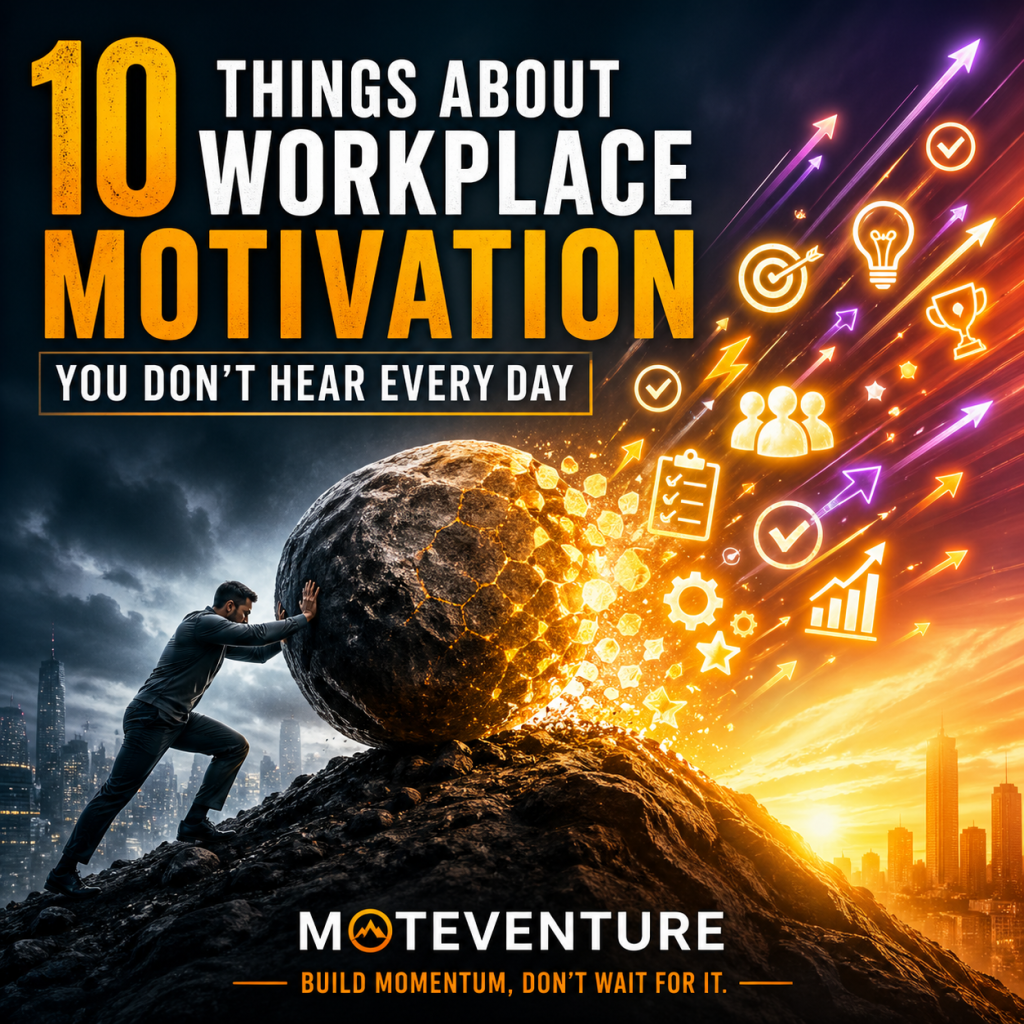
Some days at work feel like a sprint. Others feel like you’re dragging a boulder uphill while the clock hums in the background like it knows something you don’t. But motivation isn’t magic — it’s a collection of small forces that push, pull, and shape how we show up. And most of those forces aren’t the ones people talk about.
Let’s pull back the curtain.
💡 1. The “Micro‑Win Momentum Effect”
Motivation doesn’t begin with big goals — it begins with tiny victories. Each small accomplishment triggers a dopamine spark that nudges you toward the next step. It’s the neurological snowball effect: once it starts rolling, it gets harder not to keep going. Stack enough micro‑wins and suddenly you’re unstoppable.
🔥 2. The “Identity Shift Principle”
People don’t stay motivated because of deadlines — they stay motivated because of identity. When you shift from “I need to finish this task” to “I’m someone who delivers clarity,” the work becomes part of who you are. Identity-based motivation lasts longer because it’s internal, not borrowed from pressure or fear.
✨ 3. The “Visible Progress Rule”
Progress you can’t see doesn’t feel like progress. That’s why crossing off a checklist feels strangely powerful. Humans crave visual proof that their effort is moving something forward. Dashboards, trackers, sticky notes — anything that makes progress visible turns effort into momentum.
🧭 4. The “Autonomy Spark”
Motivation rises when people feel in control of how they work. Even small freedoms — choosing the order of tasks, adjusting your workflow, picking your tools — create a sense of ownership. Autonomy doesn’t just make work more enjoyable; it makes people more persistent, creative, and resilient.
🌱 5. The “Purpose Proximity Effect”
People work harder when they can see the real humans who benefit from their effort. Not a mission statement. Not a corporate slogan. Actual people. When the impact becomes personal, the work becomes meaningful — and meaning is one of the strongest motivators we have.
◕‿◕★ Where Meaning Turns Into Motivation
There was a time when I thought motivation was about pushing harder — grinding, forcing, muscling through. But the truth is quieter. Motivation comes from alignment: the right challenge, the right energy, the right identity, the right purpose. When those pieces click, the work doesn’t feel like work. It feels like momentum. And that’s when everything changes.
⚡ 6. The “Energy Matching Strategy”
Motivation isn’t about time management — it’s about energy management. High-energy hours deserve high-impact tasks. Low-energy hours are perfect for admin work. When you match your natural rhythms to your workload, productivity rises without increasing effort.
🤝 7. The “Social Gravity Factor”
Motivation spreads. When you’re around people who are focused, driven, or enthusiastic, your brain syncs with their energy. This “social gravity” can lift an entire team — or drag it down if the environment is negative. The people around you matter more than most job descriptions admit.
🎯 8. The “Challenge Sweet Spot”
Motivation peaks when a task is challenging enough to stretch you but not so overwhelming that it breaks you. Too easy leads to boredom; too hard leads to anxiety. The sweet spot creates flow — that immersive state where time disappears and productivity spikes.
🏆 9. The “Recognition Resonance”
Recognition works best when it’s specific and tied to real impact. “Great job” is nice, but “Your idea saved us two hours today” hits differently. Specific praise reinforces strengths, builds confidence, and motivates people to repeat the behavior.
🔮 10. The “Future‑Self Connection”
Motivation grows when you can clearly picture the version of yourself you’re working toward. A vague future leads to vague effort. But a vivid future — one you can see, feel, and describe — creates direction and drive. When you can picture your future self, you naturally start acting like them.
Final Shot Before the Credits Roll
Motivation isn’t a single spark — it’s a constellation. Micro-wins, identity, autonomy, purpose, energy, people, challenge, recognition, and vision all work together to create momentum. When you understand these forces, you stop waiting for motivation to appear… and start building it.
And now I’d love to hear from you. What keeps you motivated at work? Drop your thoughts, tricks, or personal motivation rituals in the comments — your insight might be exactly what someone else needs today.


Hey there — I’m Jon. This is Moteventure, my corner of the internet where music, movies, lists, and life all collide. Glad you’re here.