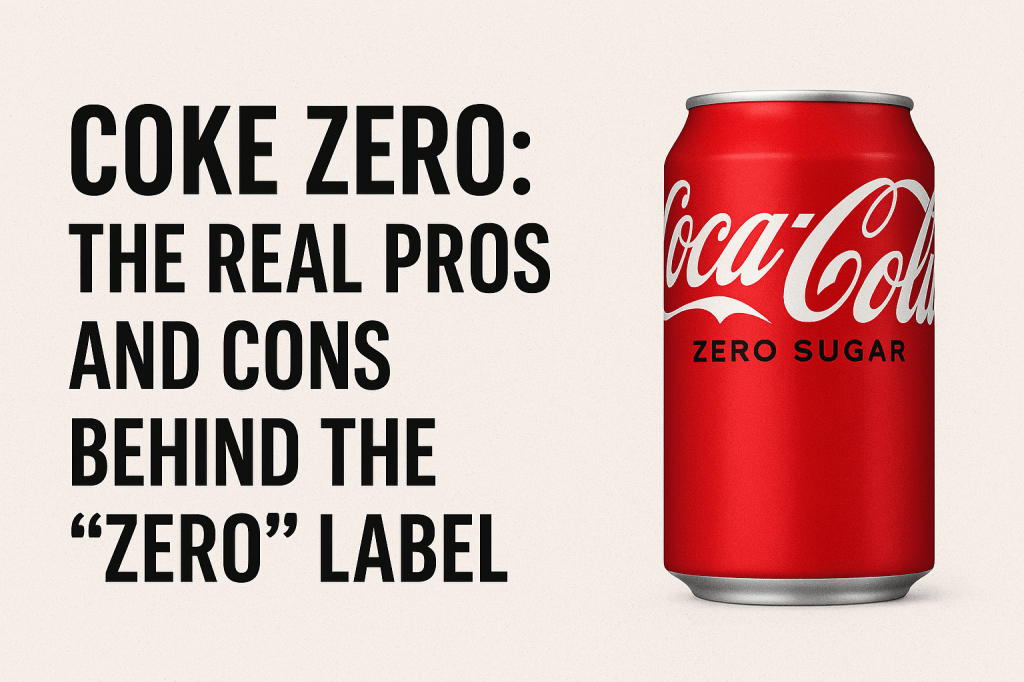
If you’ve ever tried to balance intermittent fasting, calorie tracking, and a love for flavor, you know the daily dance. Water is great—essential, even—but sometimes you just want something that tastes like… something. For many people, that “something” ends up being Coke Zero or another zero‑calorie soda. It feels like a loophole: all the flavor, none of the calories.
But what’s really going on inside that can? And is it actually a smart choice?
Let’s take a clear-eyed look at the pros and cons.
The Pros
1. Zero Calories, Zero Sugar
This is the headline benefit. Coke Zero delivers the familiar cola flavor without adding anything to your daily calorie count. For anyone managing weight or practicing intermittent fasting, that’s a big win.
2. Helps Reduce Sugar Intake
If your alternative is Classic Coke, switching to a zero-sugar version dramatically cuts your sugar consumption. That can help reduce blood sugar spikes and lower the risk associated with high-sugar diets.
3. Flavor Without Breaking Your Fast
Because it contains no calories, Coke Zero won’t technically break a fast (I would consider it does myself). For people who enjoy flavor during the fasting window—or want something more exciting than water during the eating window—it can be a satisfying option.
Zero Sugar, Full Impact
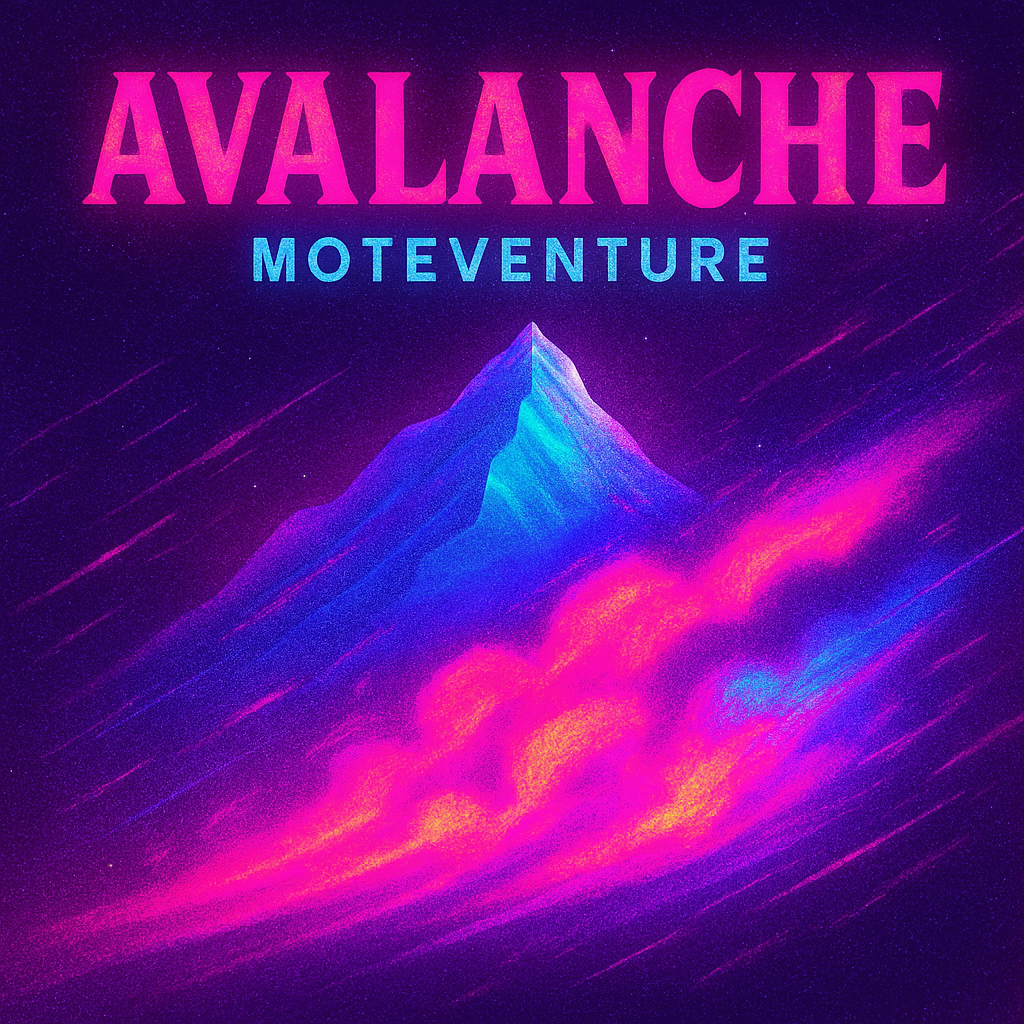
Just like Coke Zero delivers bold flavor without the calorie baggage, my single “Avalanche” hits with emotional weight minus the excess. It’s the sonic equivalent of a clean rush—intense, satisfying, and surprisingly light. Whether you’re sipping something fizzy or diving into the dance version, both are proof that zero doesn’t mean empty. It means precision. It means impact.





The Cons
1. No Nutritional Value
Coke Zero gives you flavor, but nothing else. No vitamins, no minerals, no hydration advantage over water. It’s essentially a flavored, carbonated delivery system for artificial sweeteners.
2. Artificial Sweeteners Come With Questions
Coke Zero uses sweeteners like aspartame and acesulfame potassium. These are intensely sweet—up to 200 times sweeter than sugar—and while they’re FDA-approved, research continues to explore their long-term effects. Some studies suggest potential links to metabolic changes or increased type 2 diabetes risk, though the evidence isn’t conclusive.
3. Possible Impact on Tooth Enamel
Even without sugar, acidic sodas can erode enamel over time. Coke Zero isn’t as harsh as full-sugar soda, but it’s still acidic enough to matter if you drink it frequently.
4. “Zero Sugar” Doesn’t Mean “Zero Concerns”
Some ingredients—like caramel color, preservatives, and certain additives—have been linked to potential health concerns in high amounts. Coke Zero contains several components that have raised questions in research settings, though again, the evidence varies.
So… Is Coke Zero Good or Bad?
Like most things, it depends on how you use it.
If Coke Zero helps you cut back on sugar, stay within your calorie goals, or enjoy your day without feeling deprived, it can absolutely fit into a balanced lifestyle. But it’s not a health drink, and it’s not a free pass to unlimited consumption. Think of it as a tool—one that works best when paired with plenty of water, whole foods, and moderation.
For many people, the sweet spot is simple: enjoy it, but don’t rely on it.
If you love the flavor and it keeps you on track, there’s room for it in your day. Just keep your eyes open to what’s in the can, not just what’s missing.

 MOTEVENTURE