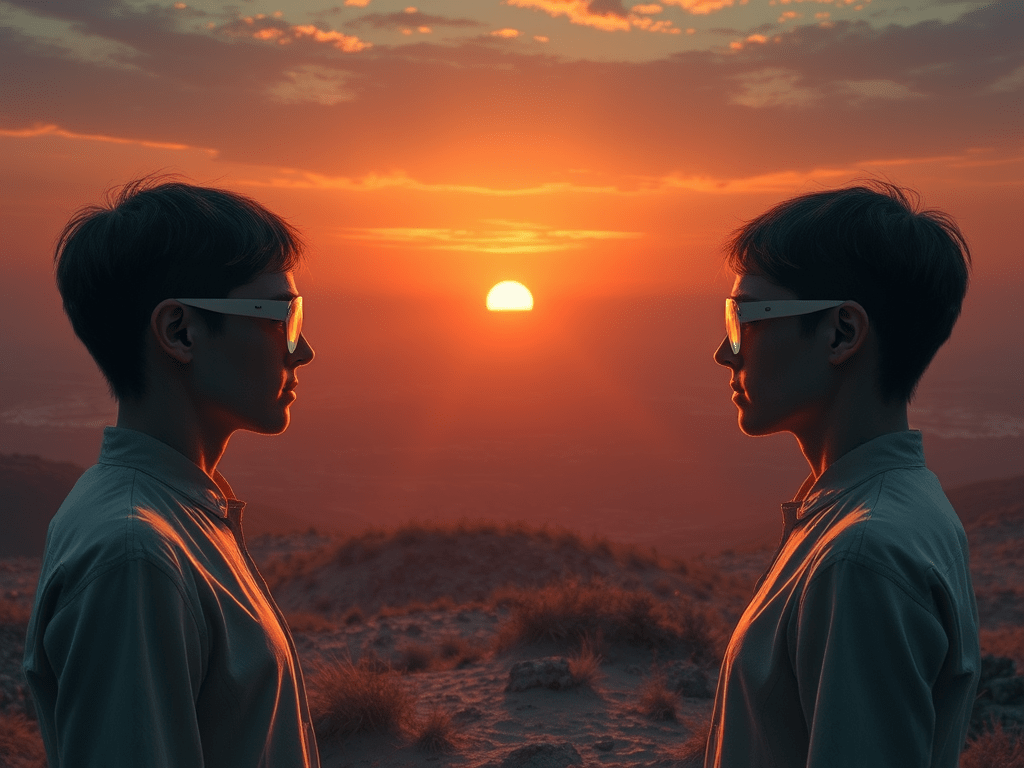
Truth—the elusive concept we spend lifetimes chasing, debating, and defending. We cling to it as if it were a fixed, undeniable force, something that can be proven beyond a shadow of a doubt. But what if truth, as we know it, doesn’t actually exist? What if all we have is perception?

The Subjectivity of Reality
Every human being experiences the world through their own unique lens, shaped by personal history, emotions, biases, and cultural context. Two people can witness the same event and walk away with completely different interpretations. A conversation can be heard with opposing conclusions. Even a simple color—say, blue—could be perceived as different shades, depending on the eyes that see it.
If truth were absolute, wouldn’t it be universally agreed upon? Instead, what we call truth often depends on the perspective from which we view it.
History Is Written by the Victor

Take history, for example. It is not merely a collection of facts, but rather a series of narratives chosen by those in power. Accounts of wars, revolutions, and societal shifts are often biased toward the perspectives of the victors. What one side may call a rebellion, another may call a liberation. What is praised in one history book could be condemned in another.
The more we examine our world, the more we realize that truth is fluid—it bends to interpretation, perspective, and context.
Science and the Evolution of Truth

Even science—often regarded as the pursuit of objective truth—is not immune to shifting perspectives. What was once held as undeniable fact can later be disproven. The belief illness was due to “bad air” rather than germs, the conviction that the sun revolved around the Earth—these were once accepted as truths. Now, they are relics of outdated understanding.
Scientific discoveries do not necessarily reveal an absolute truth, but rather the current best explanation given the information we have. As our understanding expands, so too does our version of reality.
Embracing Perception
Instead of rigidly clinging to our own version of truth, what if we acknowledged the power of perception? What if we understood that our beliefs are merely one possible interpretation of reality?
The more we accept the subjectivity of truth, the more open we become—open to other viewpoints, to learning, to evolving. When we release the need for absolute certainty, we gain the freedom to explore, question, and rethink our perspectives.
Perhaps truth is not a concrete destination, but rather a constantly shifting journey. And maybe, just maybe, the only truth that exists is the one we create in our minds.

 MOTEVENTURE