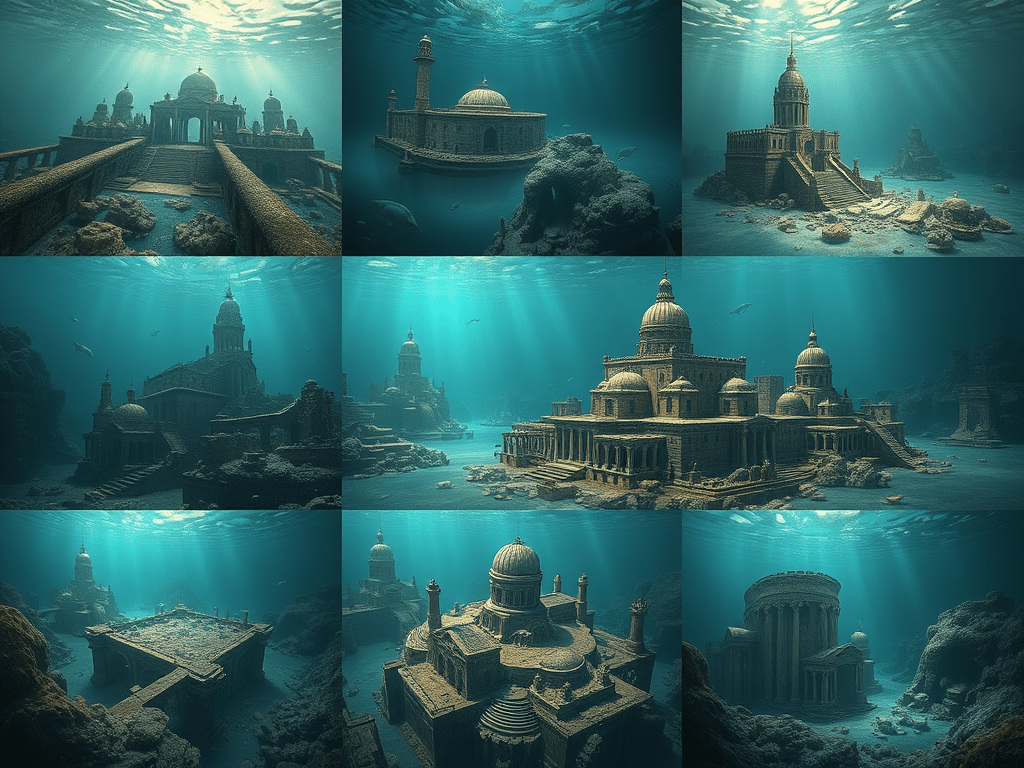
The ocean is a place of wonder, mystery, and discovery. While we marvel at its vastness and explore its depths, we occasionally stumble upon hidden treasures that tell stories of civilizations long gone. Among these treasures are submerged cities—entire communities, once thriving, now lying silent beneath the waves. These lost cities offer glimpses into the past, helping us piece together the puzzle of human history while sparking our curiosity and imagination. Let’s take a closer look at the captivating world of submerged cities, from mythical tales to real-life discoveries.
THE LEGEND OF ATLANTIS: MYTH OR REALITY?
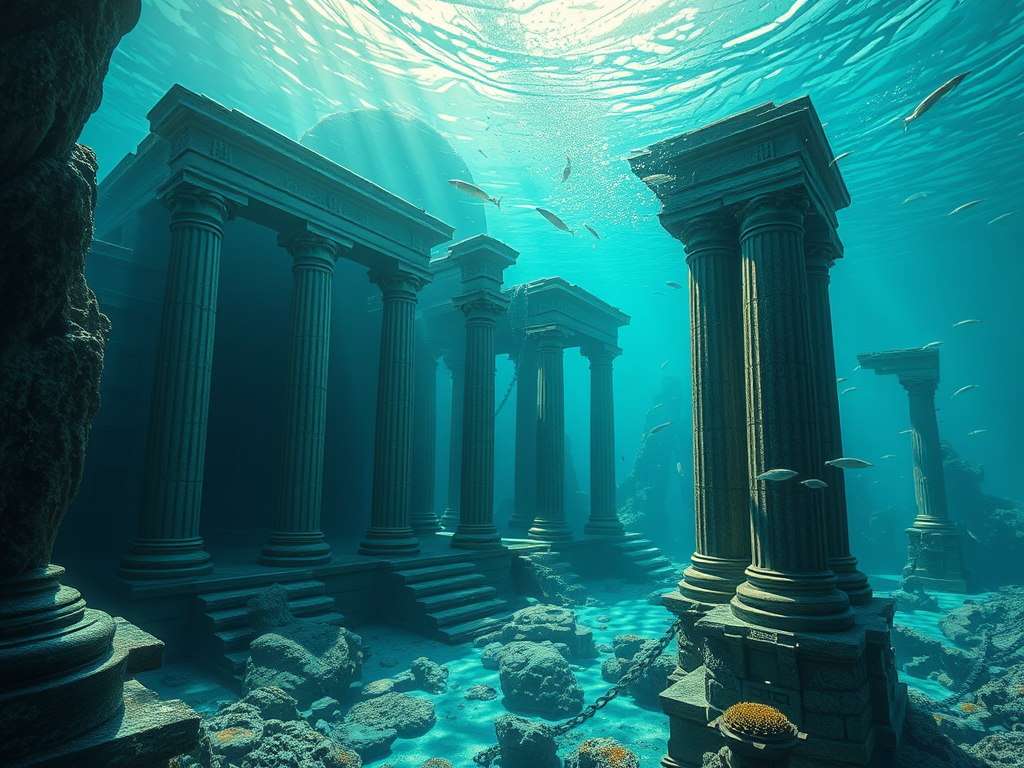
Atlantis, the most famous lost city, has fascinated humanity for centuries. Described by the ancient Greek philosopher Plato in his dialogues “Timaeus” and “Critias,” Atlantis was said to be a utopian civilization with advanced technology, flourishing culture, and immense wealth. According to Plato, the city met its demise in a cataclysmic event, sinking beneath the ocean after losing favor with the gods.
While historians and archaeologists debate whether Atlantis was based on real events or purely fictional, its legacy endures. Many theories have emerged about its possible location, including Santorini, the Caribbean, and Antarctica. The tale of Atlantis highlights humanity’s fascination with the unknown and our desire to uncover lost knowledge. Even if Atlantis remains a myth, it serves as a reminder of the fleeting nature of human achievement and the power of storytelling.
REAL-LIFE SUBMERGED CITIES: ECHOES OF ANCIENT CIVILIZATION
While Atlantis may be the stuff of legend, the world is home to several real submerged cities that offer tangible evidence of past civilizations. These underwater archaeological sites provide invaluable insights into the lives, cultures, and challenges of ancient communities.
HERACLEION: EGYPT’S HIDDEN PORT CITY

Heracleion, also known as Thonis, was a thriving port city in ancient Egypt, located near the mouth of the Nile River. The city served as a hub for trade, religion, and culture, with magnificent temples dedicated to the gods. However, Heracleion was swallowed by the sea over 1,200 years ago, likely due to earthquakes and the natural subsidence of the land.
Underwater excavations have uncovered incredible relics, including statues of Egyptian deities, inscriptions, and even preserved ships. These findings reveal the sophistication of Heracleion’s society and its role in connecting cultures across the Mediterranean.
PAVLOPETRI: THE WORLD’S OLDEST SUBMERGED CITY

Pavlopetri, located off the coast of southern Greece, is believed to be over 5,000 years old, making it one of the oldest known submerged cities. The city features well-preserved structures, including roads, buildings, and burial sites, that date back to the Bronze Age. Pavlopetri’s layout reflects advanced urban planning and offers glimpses into early maritime trade and daily life.
The study of Pavlopetri has shed light on ancient Greek society, demonstrating how coastal cities served as centers of innovation, commerce, and culture.
YONAGUNI MONUMENT: NATURE OR NURTURE?

Off the coast of Yonaguni Island in Japan lies the Yonaguni Monument, a massive underwater rock formation that has sparked debate among archaeologists and geologists. Some argue that its geometric patterns and structures suggest it was crafted by human hands, while others believe it is a natural formation shaped by ocean currents.
Regardless of its origins, the Yonaguni Monument continues to intrigue researchers and divers alike. Its mysterious appearance fuels speculation and curiosity, reminding us that the ocean’s depths often blur the line between natural wonders and human history.
WHY DO CITIES SINK?
The phenomenon of submerged cities can be attributed to a variety of natural and human-made factors, including:

- Earthquakes: Seismic activity can cause the land to sink or collapse, submerging entire regions in a matter of moments.
- Tsunamis: These powerful waves can devastate coastal settlements, washing them away or burying them underwater.
- Rising Sea Levels: Gradual changes in climate and melting ice caps have contributed to the loss of coastal cities over centuries.
- Land Subsidence: Natural shifts in the earth’s surface can lead to the sinking of landmasses, particularly in areas with soft, unstable soil.
These factors highlight the fragility of human settlements and the dynamic nature of Earth’s landscapes.
LESSONS LEARNED FROM LOST CITIES

The study of submerged cities goes beyond archaeology; it holds broader implications for understanding our past, present, and future.
- Cultural Insights: Artifacts from submerged cities offer valuable information about ancient societies, their beliefs, and their interactions with the environment. For example, religious relics found in Heracleion reveal the centrality of spirituality in Egyptian life, while Pavlopetri’s urban design showcases early advancements in city planning.
- Environmental Awareness: The disappearance of these cities serves as a stark reminder of nature’s power and the consequences of climate change. Rising sea levels and land subsidence are not just relics of the past—they are challenges we continue to face today.
- Technological Marvels: Submerged cities demonstrate the ingenuity of ancient civilizations, from their architectural feats to their maritime skills. Studying these cities inspires us to appreciate the knowledge and creativity of our ancestors.
- Preservation and Exploration: Lost cities encourage us to invest in the preservation of cultural heritage and the exploration of Earth’s oceans. Advances in underwater technology, such as robotics and sonar mapping, have made it possible to uncover hidden treasures and protect them for future generations.
THE OCEAN’S TIMELESS SECRETS
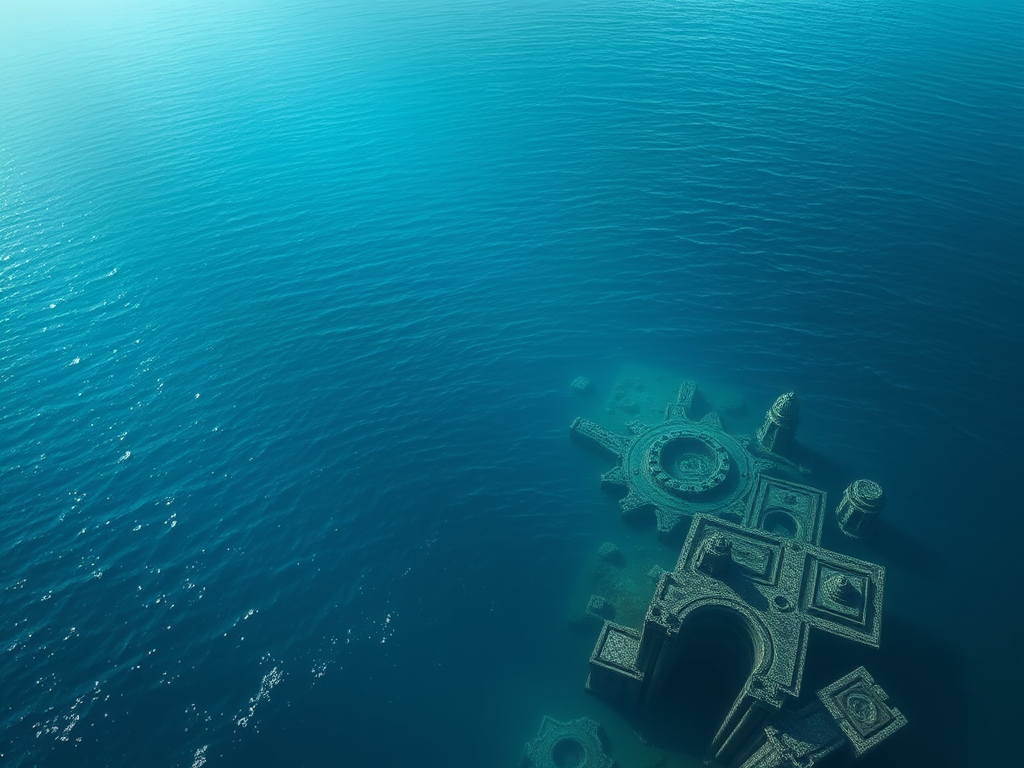
The ocean is a repository of history, holding mysteries that challenge our understanding of the world. Lost cities beneath the waves remind us of the impermanence of human endeavors and the resilience of nature. They inspire us to question, explore, and learn—connecting us to our roots while guiding us toward a more sustainable future.
As we continue to unlock the secrets of the deep, one thing is certain: the ocean’s stories are far from over. Who knows what marvels still lie hidden, waiting for us to uncover them?

 MOTEVENTURE