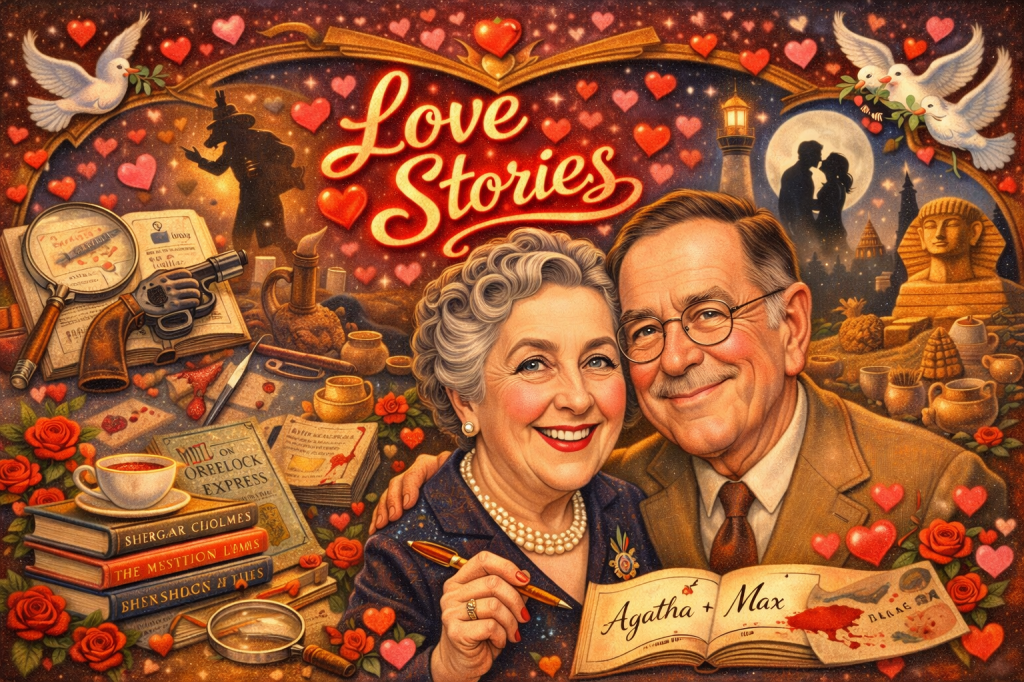
Part of my two‑week Valentine’s series, this story is one of fourteen celebrating devotion, endurance, and the many ways love takes shape.
Some love stories arrive quietly, without fanfare or fireworks — the kind that slip into a life already marked by heartbreak and rebuild something steady, surprising, and new. That’s exactly what happened when the world’s most famous mystery writer met a young archaeologist in the dust and heat of the Middle East. Agatha Christie and Max Mallowan didn’t look like a likely match on paper. She was 40, already a literary legend, and recovering from a painful divorce. He was 26, brilliant, ambitious, and still carving out his place in the world. But love, as Agatha knew better than anyone, rarely follows the expected plot.
Before we delve deeper into today’s story, here’s the heartbeat behind it all — Avalanche, reimagined in four genres. Each version captures a different kind of devotion. Which one moves you most?

POP. Bright. Cinematic. Heart-Racing. he original version that started the storm — bold, emotional, and built for big feelings. 
COUNTRY. Wide-Open-Sky Emotion. Steel‑string warmth and a love story told with grit, heart, and a little Tennessee dust. 
ROCK. Turn it up. Guitars, adrenaline, and a love that hits like thunder — Avalanche at full volume. 
AC. Smooth. Emotional. Timeless. 
A late‑night reflection version — warm, steady, and built for quiet moments. 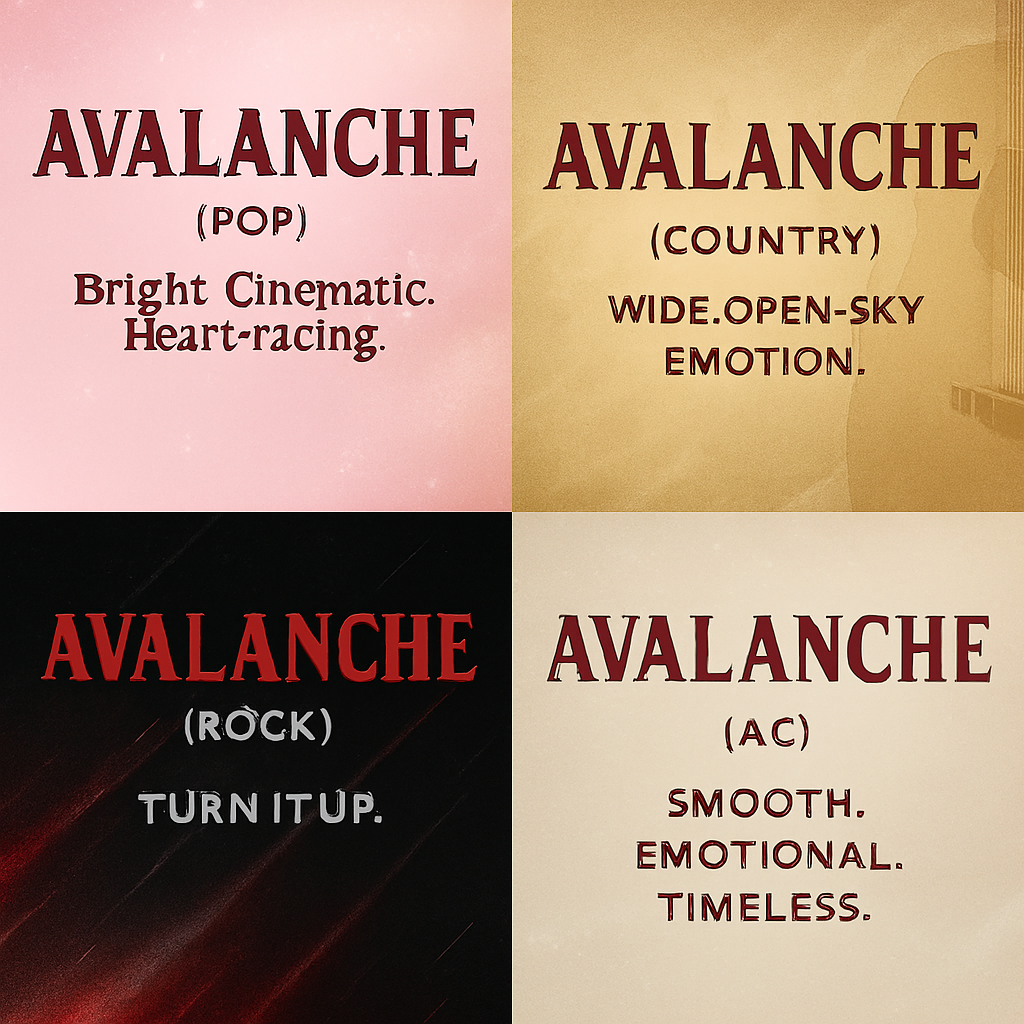
ONE SONG. FOUR WORLDS. 
Share & Playlist it. Follow me on Spotify.
They met in 1930 on an archaeological dig in Iraq, where Agatha had traveled to escape the noise of her fame and the ache of her past. She wasn’t looking for romance — she was looking for quiet, for purpose, for something that felt like forward motion. Max, working under renowned archaeologist Leonard Woolley, was assigned to help her navigate the site. What began as polite conversation soon turned into long walks, shared curiosity, and a gentle companionship that surprised them both.
Max admired Agatha’s wit, her discipline, and the way she observed the world with a novelist’s precision. Agatha admired Max’s steadiness, his kindness, and his deep fascination with history — a fascination that soon became hers too. Their connection wasn’t dramatic; it was rooted, thoughtful, and real. Within months, Max proposed. Agatha, who had once believed her heart was finished with love, said yes.
Their marriage became one of the most quietly successful partnerships of the 20th century. While Max led excavations across Syria and Iraq, Agatha joined him — not as a celebrity guest, but as a working member of the team. She cleaned pottery shards, photographed artifacts, catalogued findings, and wrote some of her most enduring novels in the evenings, surrounded by desert winds and lamplight. The Middle East became their shared world, a place where they built a life far from London society and the pressures of fame.
What made their relationship extraordinary wasn’t grand gestures or public declarations. It was the way they made room for each other’s passions. Max never tried to dim Agatha’s brilliance; Agatha never tried to overshadow Max’s career. They moved through life like two people who understood that love thrives not in competition, but in collaboration. She once joked that archaeologists make the best husbands because “the older you get, the more interested they are in you.” But beneath the humor was truth: Max cherished her — her mind, her work, her presence — for the rest of her life.
Their marriage lasted 46 years, marked by travel, creativity, and a deep, steady affection that never needed the spotlight. When Agatha passed away in 1976, Max continued his archaeological work, carrying her memory with him until his own death two years later. They are buried side by side in Oxfordshire — a final chapter written with the same quiet devotion that defined their life together.
Agatha Christie and Max Mallowan remind us that love doesn’t always arrive in youth or in perfect timing. Sometimes it finds us in the ruins — unexpected, unplanned, and exactly right. Their story is a testament to second chances, shared purpose, and the kind of partnership that strengthens both people without ever demanding that one shrink for the other to shine.
A love story written between ancient stones, carried across continents, and lived with grace. A mystery solved not by clues, but by companionship.

 MOTEVENTURE